
Checking Criminal History in Halifax County
No single Halifax County criminal records portal combines police narratives, jail bookings, state repository history, court documents, warrants, and correctional status. Start with the record that can answer the question. The free Virginia court systems are useful for a pending charge or known case. The arresting agency is the source for its report. The Blue Ridge Regional Jail Authority handles local custody, while the Virginia Department of Corrections covers qualifying state custody and supervision. An official Virginia-only history comes from the Virginia State Police SP-167 process.
Collect a full name, spelling variants, an approximate event date, and any case, incident, or booking number. A date of birth can help distinguish similar names, but public court displays may limit personal identifiers. Use the least broad request that will work. That makes it easier for a clerk or FOIA officer to find an existing record and estimate any lawful search or copy cost.
- Choose the police, jail, court, repository, registry, or corrections channel that created the needed record.
- Search the appropriate Halifax court by name, case number, or hearing date when the matter reached court.
- Compare the arresting agency, charge, dates, court level, status, and disposition before treating a result as a match.
- Ask the creating agency for its report or the clerk for the pleading, order, or certified disposition.
- Use SP-167 when an official Virginia repository history, rather than one local case file, is needed.
Halifax County Criminal Records Square
Courthouse Square is the physical center of Halifax County case records. Circuit, General District, and Juvenile and Domestic Relations courts operate at 8 South Main Street. The Commonwealth's Attorney works next door at 6 South Main Street, while the Sheriff's Office is farther down the same street. Their close locations do not merge their files. The prosecutor is not the public clerk, and a police report does not become a court pleading merely because a charge was filed.
The Halifax County departments page shows how local offices divide responsibility.
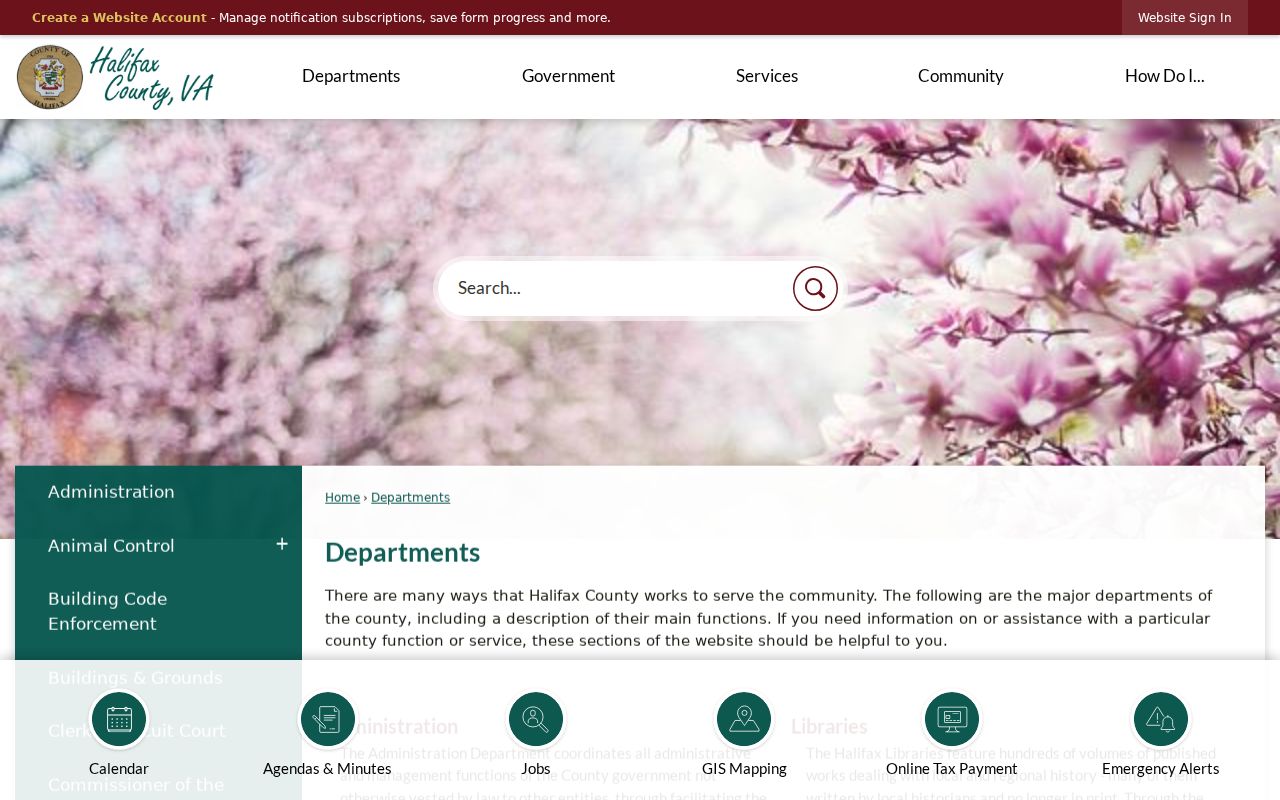
That official directory is a practical first check when a request belongs to a county office instead of a Virginia court or state agency.
Halifax Circuit Court Clerk
8 S. Main St., Halifax, VA 24558
(434) 476-6211
Felony files, judgments, appeals, and expungement filings.
Halifax General District Court
8 S. Main St., Suite 200
(434) 476-3385
Misdemeanors and preliminary felony records.
Halifax Sheriff's Office
134 S. Main St., Halifax, VA 24558
(434) 476-3339
Agency reports, warrant inquiries, and jail routing.
Virginia Official Background Checks
The Virginia State Police criminal background service uses SP-167 for a Virginia-only name check. Anyone may initiate the request, but the subject's signature must be notarized. A designated outside recipient must also sign before a notary. The current research lists a $15 fee per name, mailing to VSP CARE in North Chesterfield, and about 15 business days after receipt. VSP offers no same-day or expedited SP-167 service.
This repository product is not a public instant conviction search. It joins reported arrest cycles and outcomes held by CARE/CCRE. SP-230 is reserved for purposes authorized by statute. Fingerprint-based national checks use authorized channels, while a person seeking their own national Identity History Summary can use the FBI's subject-only process. Halifax County users should confirm any local ink-card service before visiting because no official in-county enrollment site was verified.
| Route | Scope | Key requirement |
|---|---|---|
| SP-167 | Virginia name-based history | Notarized subject signature and $15 |
| Virginia court search | Public case metadata | Select Halifax and verify the case |
| FBI Identity History Summary | Subject's national fingerprint history | Fingerprints and FBI request process |
Three Halifax County Arrest Records
One arrest may create three records that answer different questions. The arresting agency writes an incident or arrest report. The receiving regional jail records intake, custody, bond, fingerprints, and a booking image. General District Court then records the charge, hearings, and disposition, with a felony potentially moving to Circuit Court. Courts and agencies report eligible data back to CARE/CCRE, but timing gaps can leave a repository arrest cycle without its final outcome.
Record flow: Arresting agency › regional jail and magistrate › Halifax courts › Virginia State Police CARE/CCRE.
The official constitutional officers listing identifies the elected offices involved in much of this local process.
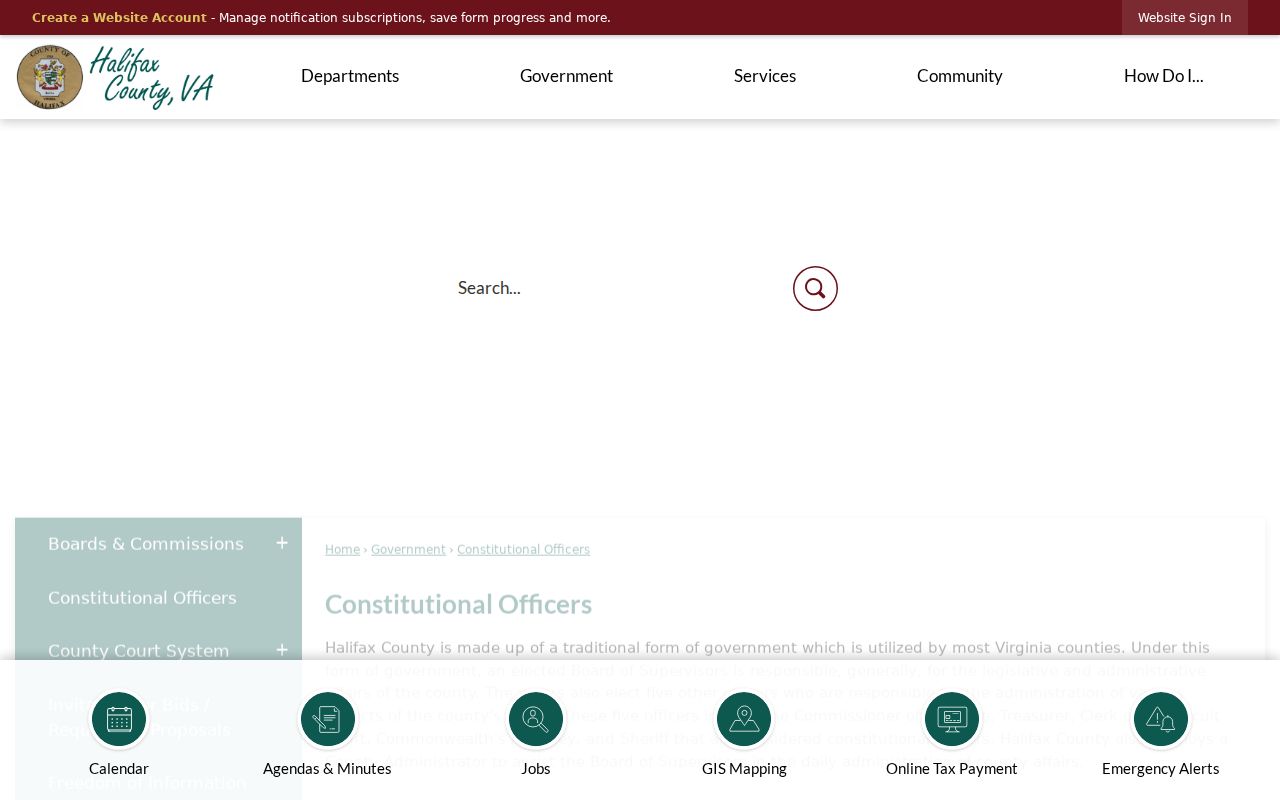
The listing helps separate the sheriff, Circuit Court clerk, and Commonwealth's Attorney instead of treating them as one records desk.
Criminal Record Types
Halifax County criminal history research often crosses several custodians. An incident report records an event or investigation and may exist without an arrest. A booking record proves intake, not guilt. A court file follows a specific prosecution. The state repository assembles reported arrest and disposition data but does not contain every pleading. VADOC and the public registry each serve narrower correctional or notification roles.
- Police and arrest reports: held by the sheriff, South Boston Police, Town of Halifax Police, VSP, or another creating agency.
- Booking records: held through the Blue Ridge Regional Jail Authority after local intake.
- Court cases: split between General District Court and Circuit Court by stage and charge level.
- Repository history: produced by Virginia State Police through the consent-based SP-167 route.
- Custody and registry entries: published through VADOC or the Virginia registry under their own rules.
Halifax County Booking Record Routes
Halifax County participates in the Blue Ridge Regional Jail Authority. Its Halifax County Adult Detention Center is at 1010 Blue Ridge Lane and can be reached at (434) 476-5500. The official JailTracker link returned an application error during the August 2026 research review, so a missing online result should not end the search. Call the detention center, contact the BRRJA FOIA officer, or use VINELink for notifications. The sheriff can also help identify the receiving facility.
A fresh local booking may not appear in the VADOC locator. That system is updated daily, yet it focuses on people within VADOC custody or supervision and warns that data can lag. The VADOC Inmate and Supervisee Locator is still the correct later-stage channel.
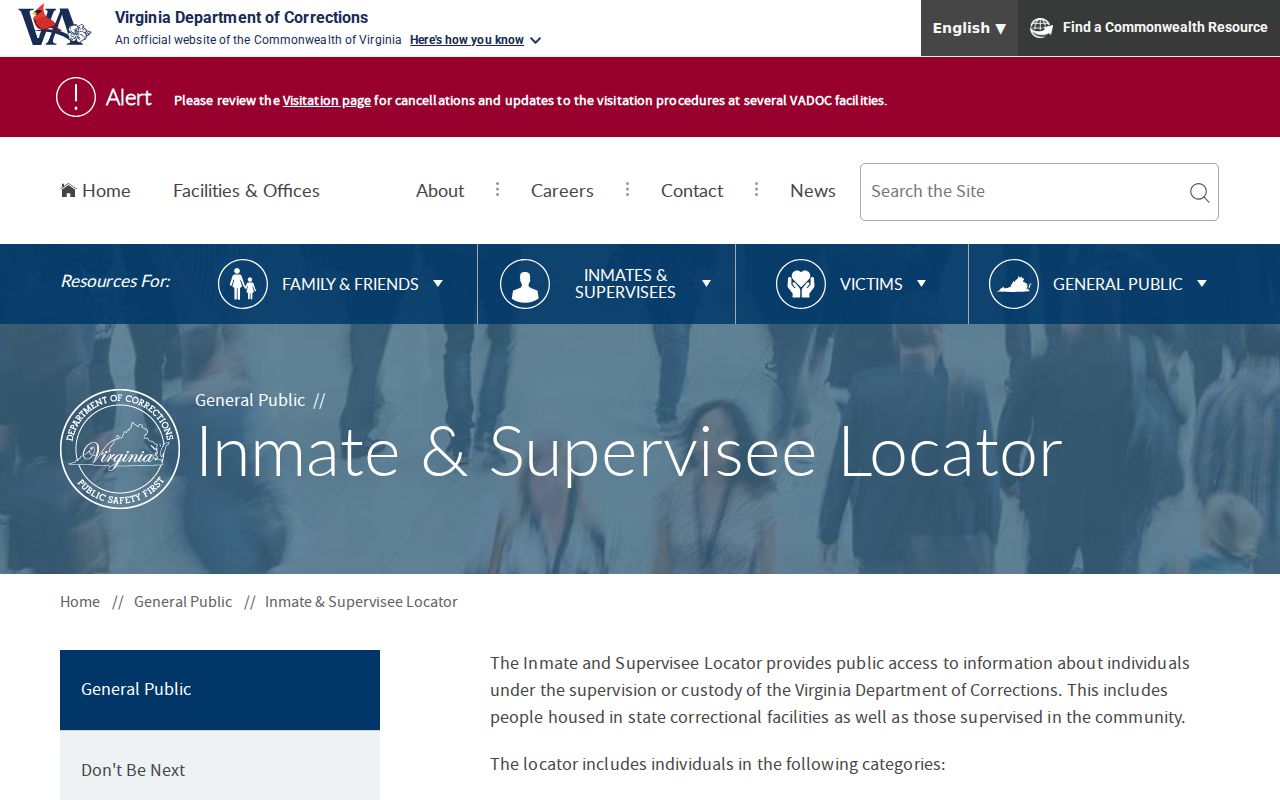
The locator's name, DOC ID, location, race, gender, and age controls help narrow state custody or supervision results, not same-day county intake.
Halifax County Supervision Record Checks
Adult felony probation and parole supervision in Halifax County is state-run through VADOC District 8 in South Boston. The public locator can include probationers and parolees as well as people in institutions, certain local or regional jail settings under VADOC authority, institutional hospitals, and Community Corrections Alternative Program placements. A locator result is narrower than the full supervision file. Treatment information, sensitive addresses, and internal case notes do not become public merely because a supervision status appears.
VADOC's probation and parole overview explains the state supervision routes. Virginia ended discretionary parole for most felonies committed on or after January 1, 1995, but legacy and special categories remain within the Virginia Parole Board's authority. To verify a Halifax County record, compare the VADOC entry with the sentencing court file. A capias tied to an alleged violation records process, not a final violation finding.
Inside a Halifax County Criminal Record
Read each field in context. A charge description and statute state the accusation at that stage. The disposition records the court's outcome. “Certified” usually means a felony moved toward Circuit Court, not that the person was convicted. “Nolle prosequi” means the prosecutor chose not to proceed at that time. A sentence can list jail time, a suspended portion, costs, probation, and other public conditions.
| Name and identifiers | Public name display and limited matching details; protected identifiers are withheld. |
|---|---|
| Arrest and booking data | Event date, agency, alleged charge, warrant, custody, and bond where public. |
| Case data | Case number, court, charge, hearings, counsel, status, and recorded outcome. |
| Disposition | Guilty, dismissed, not guilty, nolle prosequi, certified, or another entered result. |
| Sentence | Public confinement, suspended time, fine, costs, probation, and related orders. |
| Custody status | Local jail or VADOC status from a separate correctional source. |
For the pleading, sentencing order, or an authenticated result, use the exact case number and ask the correct clerk for a certified copy. Online case information is an index, not the complete paper or electronic file.
Halifax County Warrant Record Checks
No verified public Halifax Sheriff active-warrant portal was found. A careful check uses the Sheriff at (434) 476-3339, the General District clerk at (434) 476-3385, and the Circuit clerk at (434) 476-6211. A public case entry may show a warrant or capias event after it is entered, but an unexecuted or sealed warrant may remain unavailable. A narrow VFOIA request can seek an existing record only where release is lawful.
Someone trying to resolve their own possible warrant should ask the issuing court or counsel about a safe appearance, bond, and any recall or quashing process. The court controls court-issued process. An online absence is not proof that no warrant exists, and payment or appearance may take time to reach every law-enforcement system.
Note: Town police matters use Halifax state courts because Virginia has no separate municipal-court tier.
Public Access Laws in Virginia
Virginia public access depends on the record and its holder. VFOIA sets request and cost rules, but it does not turn every investigative file into an open record. Criminal-history dissemination, juvenile data, registry information, and sealed matters have separate limits. A request can receive records, a cited withholding, notice that records cannot be found, or a lawful extension. Reasonable actual search and copy costs may apply, and an advance deposit is permitted when projected charges exceed $200.
Key statutes:
Virginia Code § 2.2-3704 sets request, response, and cost rules.
Virginia Code § 2.2-3706 governs law-enforcement record access and withholding.
Virginia Code § 19.2-389 controls criminal-history dissemination.
Virginia Code § 19.2-389.1 restricts juvenile history dissemination.
Virginia Code § 9.1-912 governs registry access and bars misuse.
Halifax County Criminal Docket Rhythm
Halifax General District Court publishes an unusually useful agency schedule. South Boston police matters appear on the first four Mondays. Sheriff matters are heard Tuesday mornings, with felony preliminary hearings Tuesday at 1:00 p.m. State Police matters run on Thursdays, and Town of Halifax police cases appear on the first Friday. Other slots cover DWR, ABC, Forestry, Parks, Animal Control, and ASAP matters.
This rhythm can help identify the agency behind a Halifax County criminal case, but it does not replace a name, case number, or hearing-date search. A felony can later move to Circuit Court after waiver, certification, or indictment. Halifax Circuit Court's grand jury and term day occurs on the first Thursday of each month, giving felony files a separate monthly cycle.
The Town of Halifax history page supplies local context for the courthouse-centered town.

The historic setting is compact, but each office on and near South Main Street retains a distinct record role.
Halifax County Criminal Charge Classes
Virginia uses six felony classes and four misdemeanor classes. The class shown in a Halifax County case affects the possible punishment and the court route, but it does not replace the actual charge text or disposition. General District Court tries misdemeanors and handles the preliminary stage of felonies. Circuit Court tries felonies and hears misdemeanor appeals. Class 5 and Class 6 statutes permit misdemeanor-range punishment in specified circumstances, yet the charge remains a felony unless lawful case action reduces or amends it.
The current punishment ranges come from Virginia Code § 18.2-10 for felonies and Virginia Code § 18.2-11 for misdemeanors. Read the case outcome before drawing a conclusion from the filed class. A charge can be amended, dismissed, tried, or resolved through a plea, and the final court order is the sound source for what happened.
Sealed, Expunged, and Restricted Records
Traditional Virginia expungement under § 19.2-392.2 chiefly addresses qualifying non-conviction outcomes, mistaken identity, and specified pardons. An acquittal, dismissal, or nolle prosequi may support a petition, but no result guarantees relief without review of the current statute and exclusions. File through the court tied to the disposition. The petition identifies the charge, arrest, court, outcome, petitioner, and agencies thought to hold records. Fingerprints and service on the Commonwealth are part of the process.
Virginia's sealing framework became effective July 1, 2026, while a revised expungement procedure is scheduled for December 1, 2026. Current law must be checked on the filing date. Halifax's exact filing fee was not located in official online sources. Ask the Circuit clerk about the current civil filing calculation, copy charges, fingerprint directions, and any fee-waiver route. Juvenile files, protected matters, victim information, and records covered by an order remain subject to separate limits.
Target Halifax County Record Requests
The Sheriff's directory does not publish a separate records division, dedicated request form, or local fee sheet. Write a focused request to the office's listed FOIA channel. State the record type, date and time range, location, agency, and any report, case, or booking number. Identify the preferred format and ask for an estimate before costs pass a chosen limit. VFOIA reaches existing records, not answers to open-ended questions.
The official Halifax County site carries the county's current office links and operational notices.
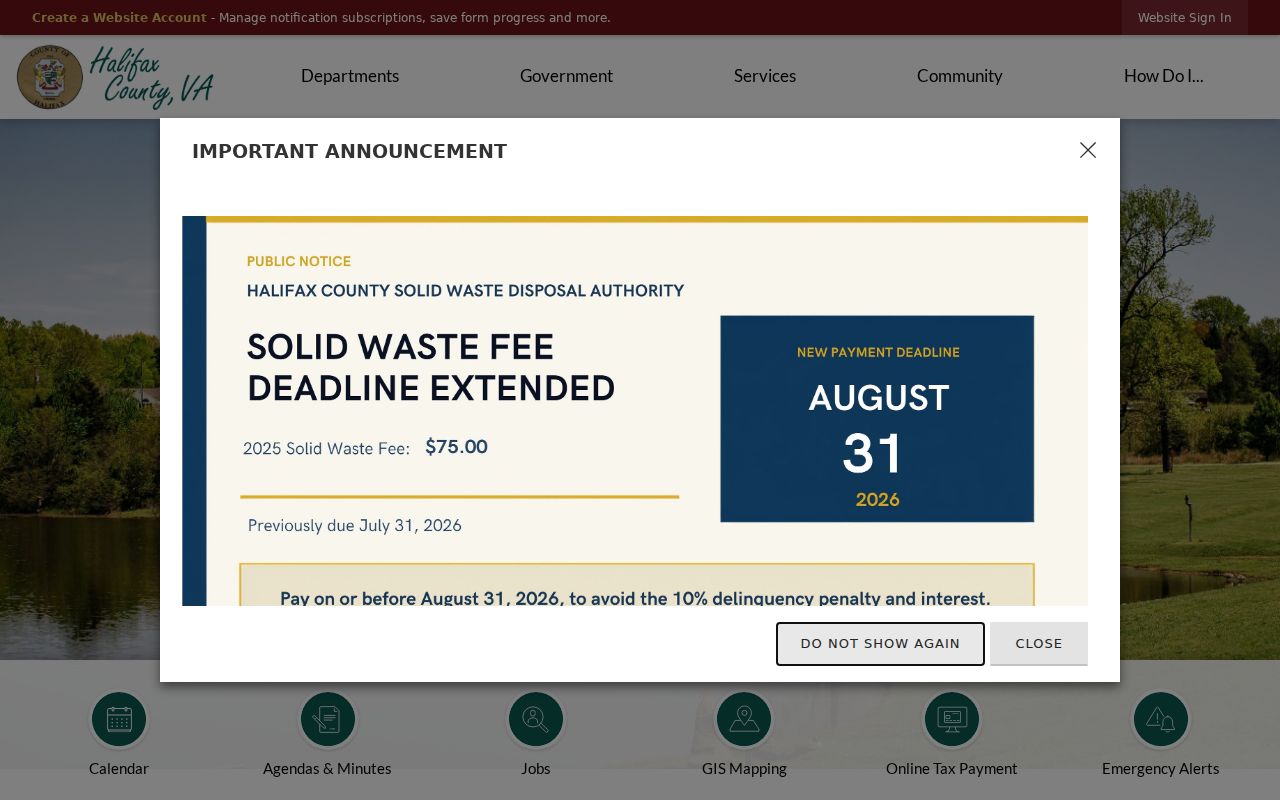
Check that official source before a visit, especially because the county has posted a court order concerning portable electronic devices in the courthouse.
| Request detail | Why it helps |
|---|---|
| Record type | Separates incident, arrest, booking, warrant, CAD, or video material. |
| Date and location | Narrows the search and possible cost. |
| Known identifier | Points to the exact report, case, or booking. |
| Delivery and cost limit | States the preferred format and when an estimate is needed. |
Halifax County Criminal Records by City
Three incorporated places receive local record guides under the 2020 Census ranking. South Boston and the Town of Halifax have police departments, but their cases still enter Halifax's state courts. Scottsburg has no confirmed town police desk or municipal court, so county and state channels lead its record search.
South Boston Criminal Records
Population 7,966. City police cases follow published Monday dockets in Halifax GDC.
Halifax Criminal Records
Population 1,118. Town police matters use first-Friday Halifax GDC dockets.
Scottsburg Criminal Records
Population 127. Sheriff, State Police, and Halifax court routes replace a town records desk.
Town and County Criminal Records
South Boston is Halifax County's population center, yet it has no municipal court. Its police department creates city reports, while cases are heard in Halifax General District Court. The Town of Halifax follows the same split. A town police report belongs with that department; the court outcome belongs with the clerk; the state history belongs with VSP. Keeping those layers separate prevents a city request from being sent to the county sheriff by default.
Scottsburg's official charter documents its incorporated status, but no town police records counter was confirmed. The Virginia charter page for Scottsburg confirms the local government context.
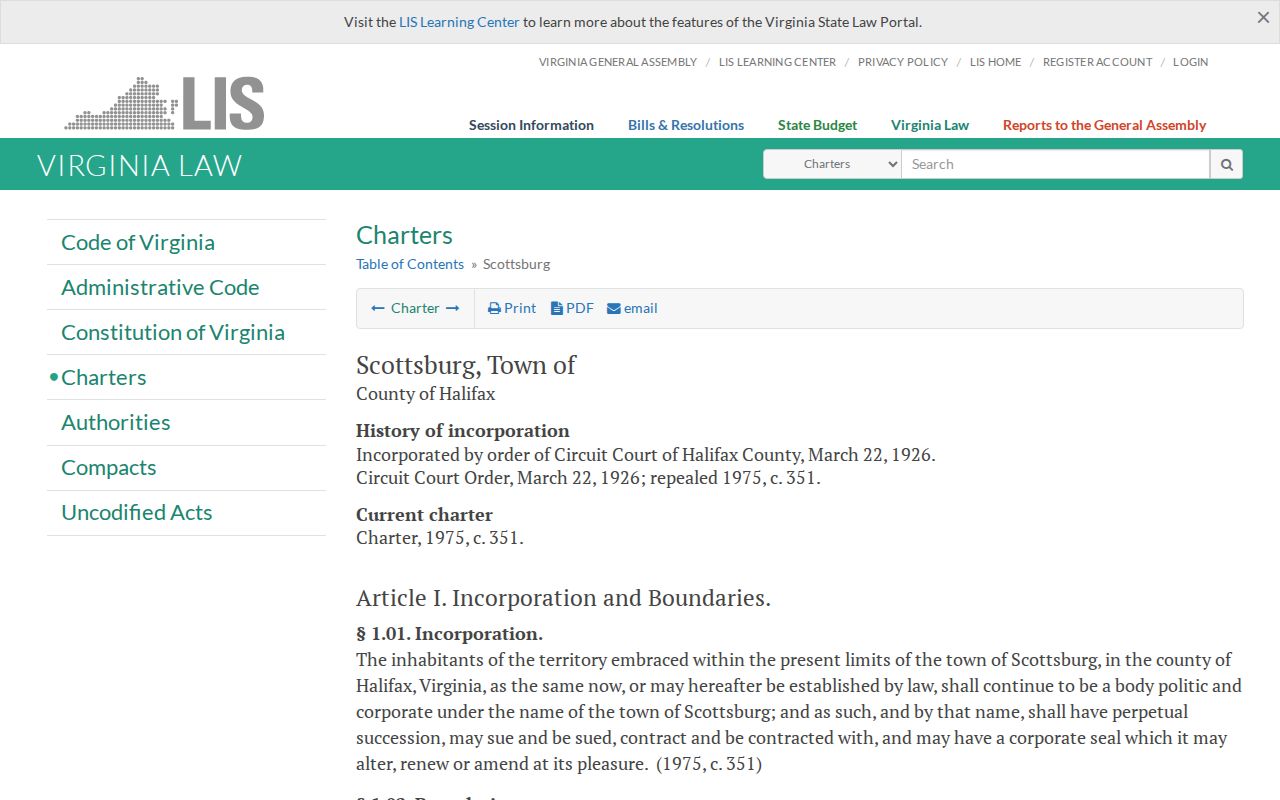
For a Scottsburg event, identify whether the Halifax Sheriff or Virginia State Police created the report, then use Halifax GDC or Circuit Court for the case stage.