
Sex Offender Checks in Halifax County
The official starting point is the Virginia Sex Offender and Crimes Against Minors Registry. It is a statewide public-notification database managed by the Virginia State Police, not a separate list owned by Halifax County. Use it for a name search or to examine a place in and around Halifax County. The Sheriff's Office performs local registration and verification work required by Virginia law, but the public-facing results come through the state system.
Choose the channel based on the question. The Virginia registry is best for current in-state public data. The U.S. Department of Justice's national system is useful when someone may have ties beyond Virginia. For questions about a Halifax County entry, contact the registering agency or VSP rather than assuming a screen is complete. A registry search is built for public protection. It does not replace a court-file search for pleadings and outcomes or a VSP criminal-history request for repository data.
Halifax County Registry Search Layers
The state and national tools overlap, but they serve different scopes. The Virginia database is the direct source for Virginia entries and the place to read the state's notices. Dru Sjodin National Sex Offender Public Website, commonly called NSOPW, searches participating jurisdictions across the country and routes readers back to the source jurisdiction's data. A person who moved, works across a state line, or has an unclear location may require both searches.
The official NSOPW view also helps readers remember that local radius results are not a universal clearance. Its absence from one search does not prove that no registration exists elsewhere.
The national registry search page provides that broader layer:
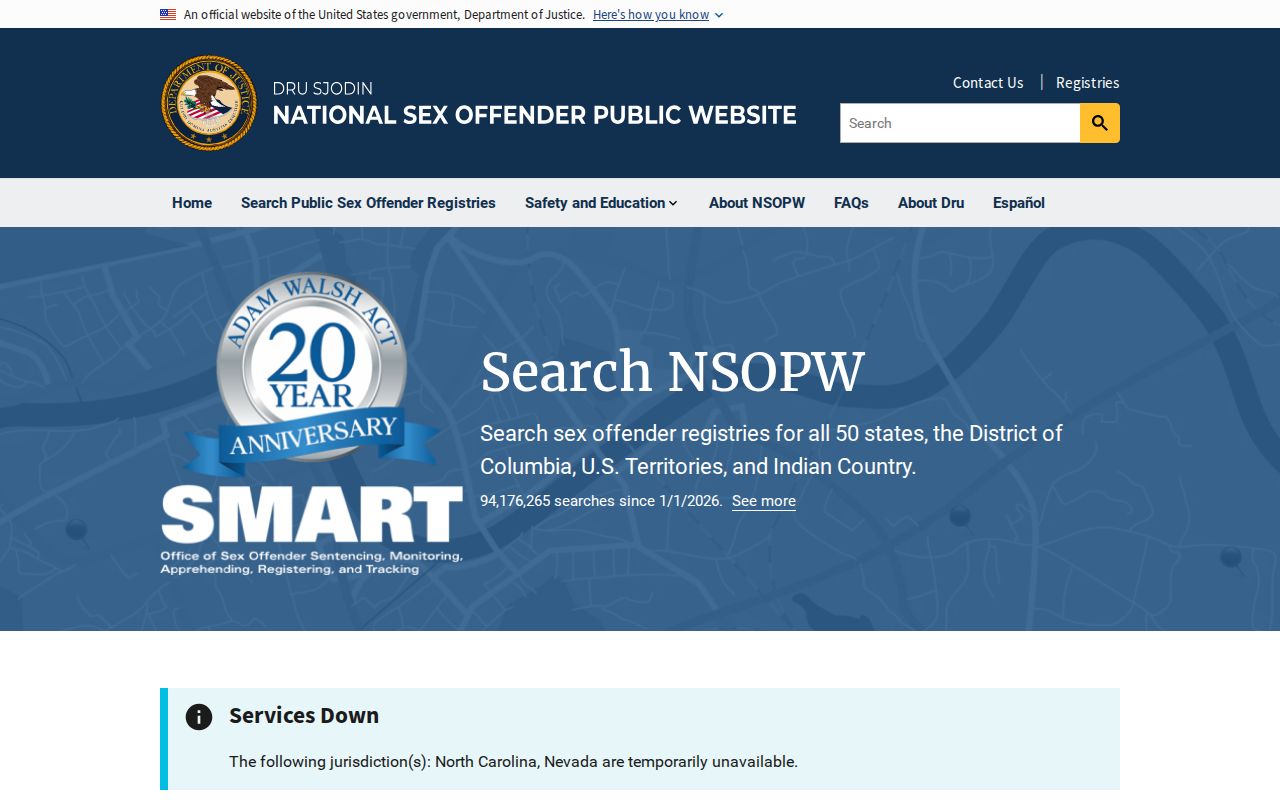
Using the national tool after the Virginia search is a sound cross-state check, while Virginia remains the authoritative source for its own public listing.
How to Search the Virginia Registry
Open the live registry and read its conditions before entering search terms. Search controls can change, so use the choices shown on the current screen instead of relying on an old saved image. Halifax County can be selected as a geographic filter. A name can also be used when the goal is to distinguish one person from others with similar details.
- Open the official Virginia registry and accept any displayed disclaimer or use acknowledgment.
- Choose a person search by name or a geographic search by address, city, county, ZIP, radius, or map when offered.
- Select Halifax County or enter the most precise known location, then review the results without relying on name alone.
- Open the matching public profile and compare aliases, physical description, status, address details, offense, and registering agency.
| Field or control | Type | Required | Use |
|---|---|---|---|
| Last / First Name | Text | Method dependent | Person search under the live site's matching rules. |
| Address | Text | Geographic method | Sets the location for nearby results. |
| City | Text or selection | Optional | Narrows to Halifax, South Boston, or another locality. |
| County | Selection | Optional | Select Halifax County for county-wide results. |
| ZIP / Radius | Text and selection | Search dependent | Narrows a proximity search using current live choices. |
| Wanted / Noncompliant | Filter | Optional | Shows a status subset when the live interface offers it. |
The official Virginia registry interface shows the search controls as they exist now:
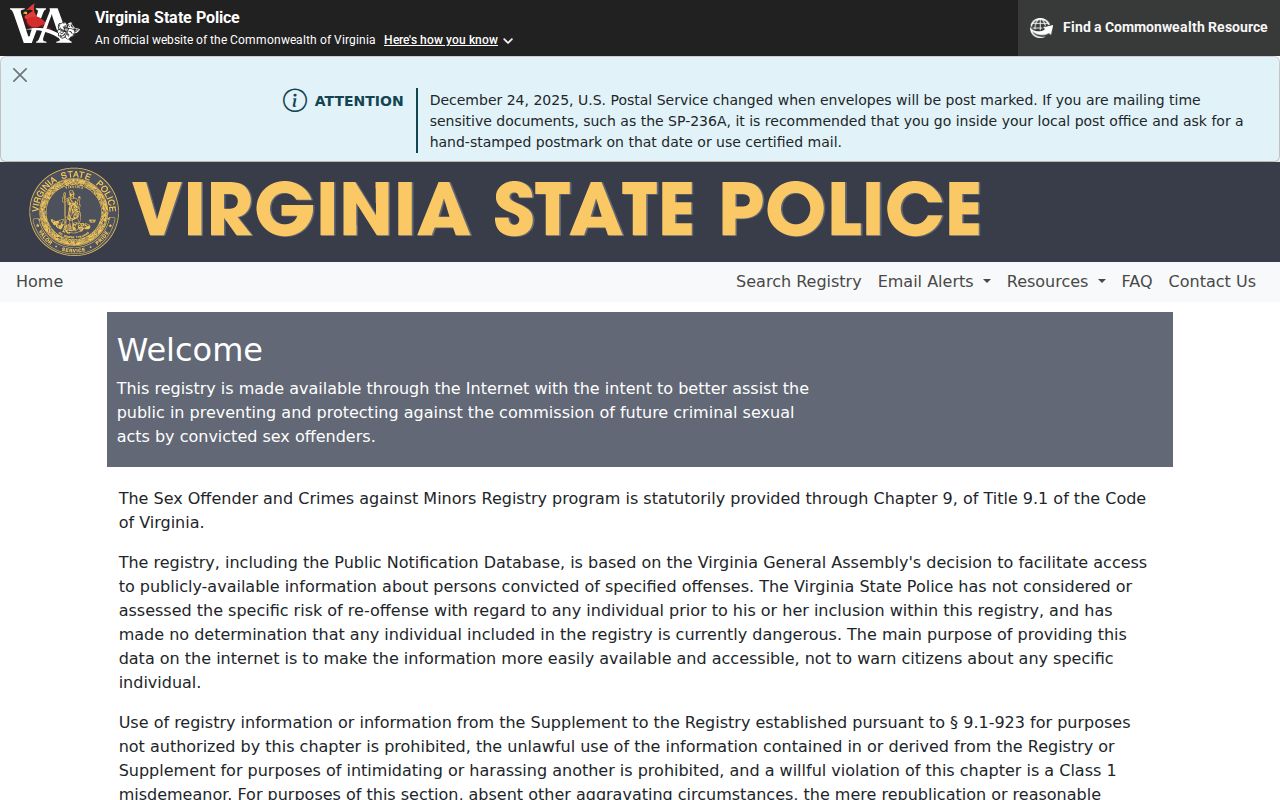
Start broadly enough to catch spelling or location differences, then narrow the Halifax County results with several profile details.
Missing Halifax County Registry Results
A blank radius or name search has limits. It can reflect spelling, an alias, a location entered in a different form, a record update in progress, or registration in another jurisdiction. The portal's public view is also governed by Virginia law, so it should not be treated as a full list of every offense or every person with any sexual-offense conviction. Try a second search method and use NSOPW when out-of-state history is possible.
If a known public entry appears missing or inaccurate, preserve the search terms and contact the Virginia State Police Sex Offender Registry at (804) 674-2825 or sor@vsp.virginia.gov. A suspected failure to register should go to the Halifax County Sheriff's Office, local police, or VSP. Do not investigate a home, workplace, or person yourself. Officials can compare the report with nonpublic registration records and court documents.
Note: Absence from one Halifax County search is not proof that no registration duty exists in Virginia or another jurisdiction.
Inside a Registry Profile
A public profile combines identity, location, offense, and compliance information authorized for release. It may include a photograph and physical descriptors to help distinguish people with the same name. Address, work, school, or vehicle information appears only to the extent allowed by statute and the person's classification. The profile may also identify the local registering agency and current status. Read the conviction entry with care: it describes the offense tied to registration, not every event in a person's court or repository history.
| Name and Aliases | Published name forms used to distinguish the registrant. |
|---|---|
| Photo and Description | Registry image plus permitted sex, race, height, weight, hair, eyes, scars, marks, or tattoos. |
| Registered Location | Address or location detail made public under current Virginia law. |
| Offense Information | Conviction offense, jurisdiction, statute or description, and conviction date when disclosed. |
| Classification | The statutory tier or qualifying classification, not a local risk score. |
| Status and Agency | Compliance or wanted notice, registration dates, verification data, and local registering agency where public. |
A profile is a public-notification record. For the charge history, motions, judgment, and sentence in a Halifax County prosecution, consult the court record rather than stretching the profile beyond its purpose.
Halifax County Registry Verification
Virginia divides the work between local law enforcement and VSP. The sheriff or other prescribed local agency handles registration and verification events in Halifax County. VSP manages the statewide database and registry program. That division explains why a local office can confirm where a question should go even though it does not operate a separate Halifax County public list.
The system depends on coordination with courts and agencies. A January 2026 VSP criminal-justice newsletter reported 833 eligibility research investigations during 2025 and 26,025 registrants. Those statewide figures show that inclusion and update decisions require more than copying a judgment into a web page. Staff may need to research eligibility, examine records, and coordinate with custodians. A reader should report a concrete error to officials and allow the responsible agency to review it.
For a local report, give the name, the public profile detail at issue, why it appears wrong, and a way to reach the reporter. Do not circulate an unverified claim in the neighborhood.
Virginia Registration Levels and Requirements
Virginia uses offense-based statutory tiers and classifications. Halifax County does not assign its own risk score. Title 9.1, Chapter 9 controls registration, verification, duration, relief, and public dissemination. Higher-tier and sexually violent classifications generally carry lifetime duties and more frequent checks. Eligible lower classifications may have a set term or a petition route, but the exact result depends on the offense, dates, and current statute.
| Classification | Duration | Verification |
|---|---|---|
| Eligible lower classification | Statutory term or possible petition route under current law | Frequency set by the current statute |
| Higher tier | Often longer or lifetime registration, subject to current text | More frequent verification may apply |
| Sexually violent classification | Generally lifetime under the controlling statute | Enhanced verification duties may apply |
Current-law caution: Virginia amended tier and registration-interval rules in 2025. Do not rely on an older fixed 10-year, 25-year, or lifetime chart. Check the live Sex Offender and Crimes Against Minors Registry Act, especially registration, verification, duration, and relief provisions, before drawing a conclusion about one person's duty.
The current Virginia registry law is the source for those changing duties:
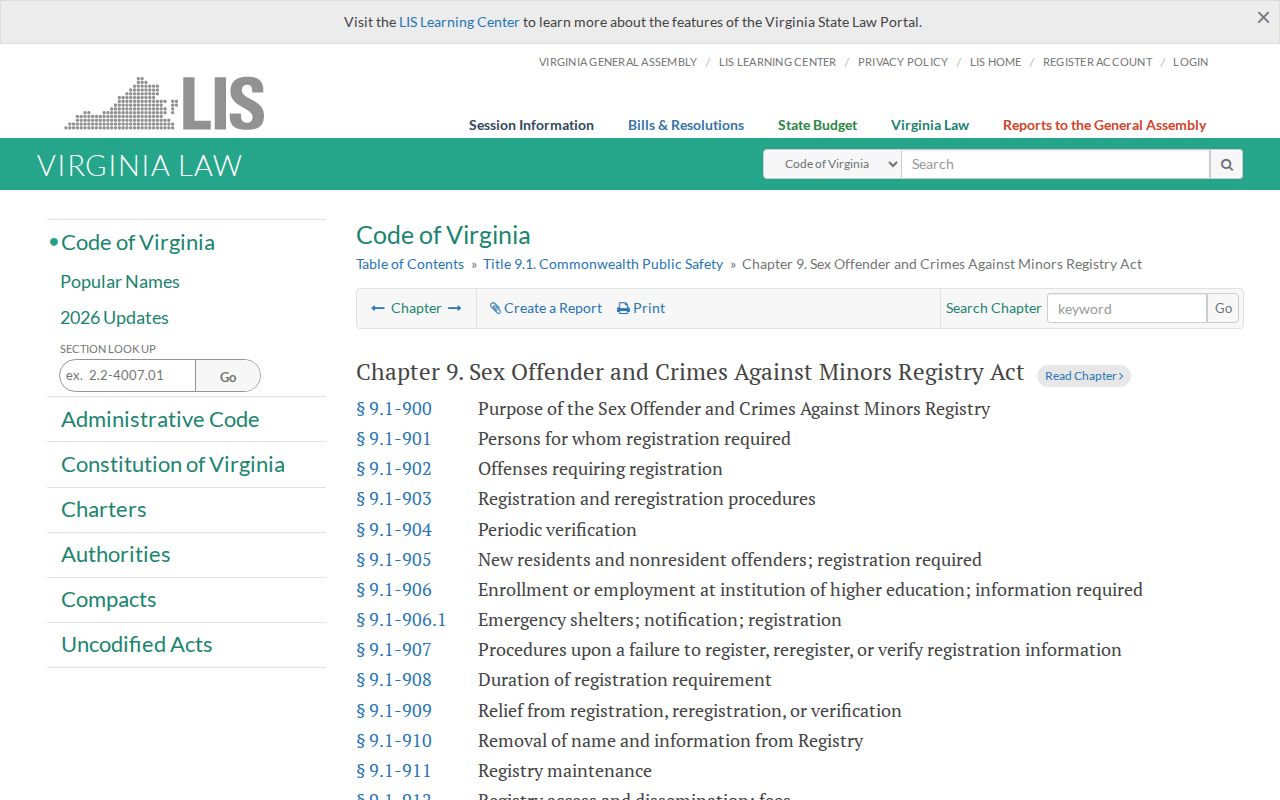
Reading the current chapter prevents an old duration chart from being mistaken for law that governs a Halifax County registration today.
Reporting Halifax County Registry Concerns
Use official reporting paths when a listing appears wrong or a possible violation comes to light. The Halifax County Sheriff's Office can receive a local concern at 134 S. Main Street, Halifax, Virginia 24558, during published weekday hours, or by phone at (434) 476-3339. VSP registry staff can address statewide database questions at (804) 674-2825 or sor@vsp.virginia.gov. If immediate danger exists, use emergency services.
Describe what was observed without trespassing, surveillance, confrontation, or online accusations. Include the public profile, date, and specific conflict, such as a published location that appears outdated. Law enforcement decides whether the information supports follow-up. That approach protects the community while reducing the chance that a mistaken identity or stale observation causes harm.
A court clerk is the better source for a conviction document. Registry staff are the better source for the public listing. Keeping those roles separate makes a report more useful and directs it to the office that can act.
Halifax County Registry and Court Records
A registry profile and a criminal court file answer different questions. The registry identifies public registration facts tied to a qualifying conviction. Halifax General District Court records show misdemeanor proceedings and early felony steps, while Halifax Circuit Court holds indicted felony files and final felony judgments. Court records may include charges, hearing events, plea, disposition, and sentence. The registry does not reproduce that whole file.
Likewise, an older court entry does not prove a person's present registry status. Duties can depend on classification, later orders, relief provisions, and changes in law. Use the current public profile for notification status and the correct clerk for authenticated case documents. When two sources appear to conflict, give officials the case number and registry detail rather than trying to decide which record controls.
This separation is important in Halifax County because court cases use Virginia's state court system, while the public registry is maintained by VSP.
Community Notification and Lawful Use
Registry information supports awareness and safety planning. It may help a family understand nearby public listings, confirm a profile found in a national search, or give law enforcement a precise lead about possible noncompliance. It does not authorize threats, public shaming, trespass, interference with lawful activity, or direct attempts to enforce registration rules. The safest response to a concern is a clear report to the sheriff, local police, or VSP.
Virginia Code § 9.1-912 governs public dissemination and places an express limit on misuse. The statute's warning is part of the registry's function, not a minor footnote. It protects registrants, their households, and the public from acts based on anger, a bad match, or misunderstood data.
Misuse is a crime: Virginia Code § 9.1-912 prohibits using registry information to intimidate or harass. Do not threaten, confront, discriminate against, or harm a registrant or household based on a listing.
The official public-access and misuse statute states the rule that applies to Halifax County registry use:
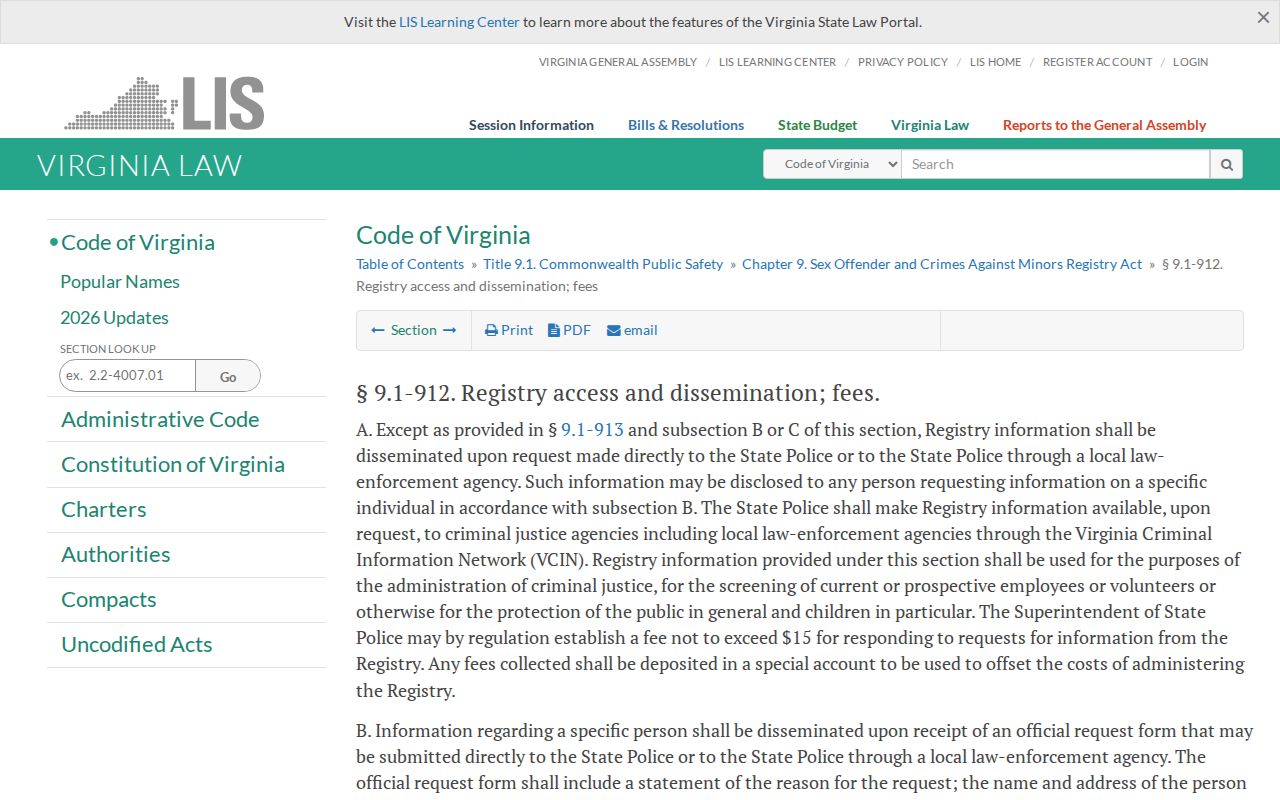
Following that warning keeps the search focused on lawful community protection and puts suspected violations in the hands of trained officials.